Welcome to District court Ghotki
The District court Ghotki has endeavored to facilitate speedy justice across the district and to ensure this goal; instant retrieval of data by the click of a button has been our endeavor. All the courts have been provided computers and are connected through a computer network; everyone is able to locate their case and its status in the comfort of their places of work or at home.
Opening Hours
Mon to Th & Sa 08:30 AM – 03:00 PM
Friday 08:30 AM – 12:30 PM
Sunday Closed
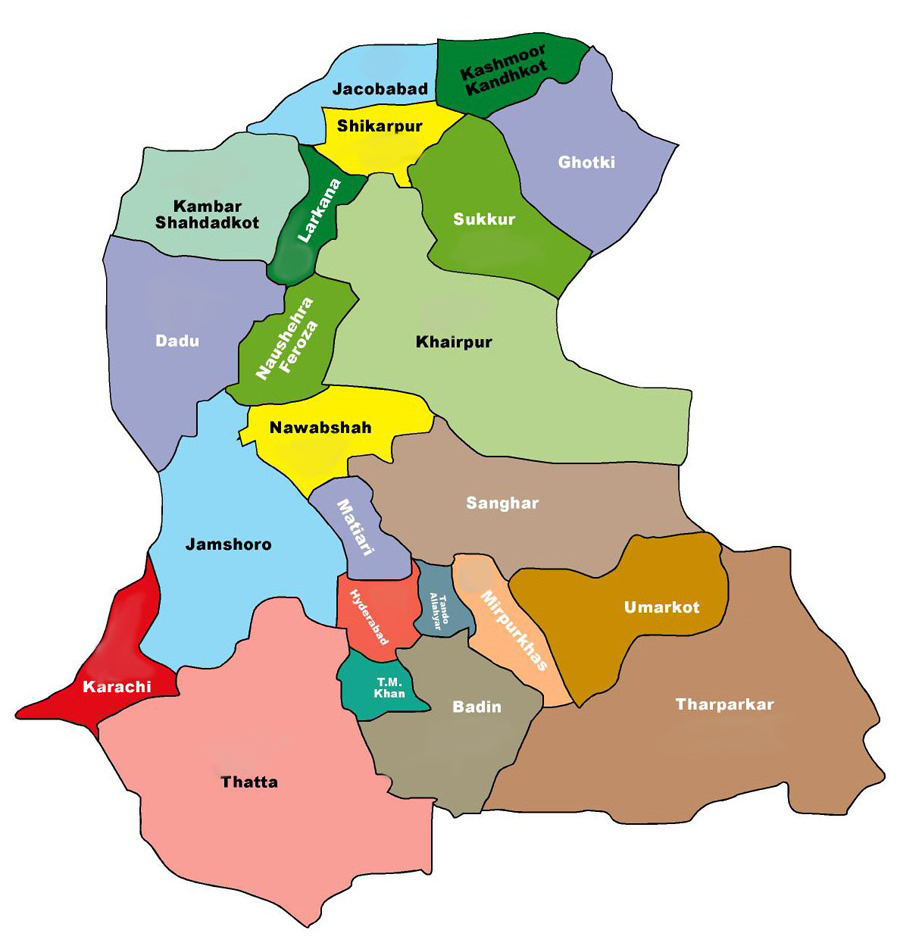
District Ghotki
Ghotki was founded by an ambassador general of Raja Ibn Selaj Birhman (a relative of Raja Dahar of Sindh) in 637 A.D (15th year of Hijra) and named after Hath Sam who set up an military camp after defeating the Muslim Army of Arabia. The camp later assumed the shape of a village in 639 A.D (17th Shaban in 17th year of Hijra) when people of different tribes went there to settle. Two years later, the people deserted this village and it, again, became rural and uninhabited. In the year 695 A.D., fishermen settled there and named the village "Miani," but when the river changed its course the village was again abandoned.
In 712 A.D, Mohammad Bin Qasim conquered the Sindh by defeating Raja Dahar. Ghot Ibn Samed Ibn Dahar, a Hindu born to a son of Raja Dahar, settled there. Ghot voluntarily and happily accepted Islam from the Arabs and married a Muslim, Emna, (according to Shariat-e-Mohammadi) and gave birth to a baby boy, Tameer, from whom the Ghota tribe came into being. Arabs awarded many jagirs (grants of money and land) to the Ghotas and named this village "Dharwali" to honor their grandfather. Subsequently, as the Ghotas progressed quantitatively and culturally, the name of village was changed from Dharwali to Loh-e-Saheban when a saint, Syed Mubarak Shah Jillani Baghdadi, around 1747, named as Loi Sahiban in persian which means stay of sahibans (Royals) came from Bhaghdad and married a girl of the Dhareja family, the daughter of Adal Khan Dharejo, and permantly settled there. His shrine was built at a village named Adilpur and many people pay homage to the saint by visiting his grave. After the British conquest of Sindh province in 1847, the British awarded huge blocks of irrigated, fertile land to the Ghotta tribal chieftains in return for their loyalty. Gradually, the town's name changed into Ghotki (of Ghottas) in lieu of Loh-e-Saheban. A well known Muslim tribe, the Arain tribe, settled here, whose history is connected to Muhammad Bin Qasim. The Arains are the descendants of those Umayyad Arab soldiers who accompanied Muhammad Bin Qasim. According to the order of the new caliph, Caliph Al-Walid ibn Abd al-Malik, the army was supposed to stay in Sindh or in other parts of the Indian sub-continent. The remaining Arab Umayyad soldiers were permanently settled on the Indian sub–continent and in the Ghotki area. These Arab soldiers came from the ancient city Jericho Arīḥā. In the beginning, they were known as Areehai and later became Arain.[2] There are Sindhi speaking Arains who are the ancient inhabitants of Ghotki, since the time period of Muhammad Bin Qadim, while the Punjabi Arains (named after Punjab) speaking Punjabi, and have been settled in the Ghotki District since the 1940s.
Services
Contact Us
Our Address
District & Sessions Court Ghotki
Email Us
djghotki@sindhhighcourt.gov.pk
Call Us
0723681488